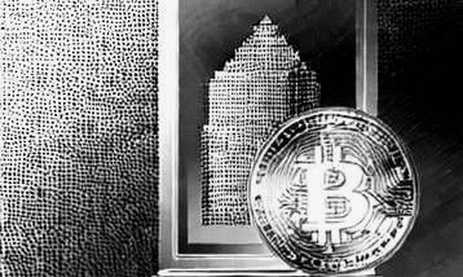
Hashrate as Money: The Bold, Broken Dream of Compute-Backed Dollars
Ivytoshi
I don't care how many times someone tells you that tokenizing compute is the next trillion-dollar market. The 2017 break didn't teach us that. It taught us that when a concept is this seductive, the gap between the narrative and the code is where fortunes go to die. And right now, the narrative around 'hashrate as an asset class' is running a marathon while the technology is still learning to crawl.
Over the past week, a concept piece has been circulating in the darker corners of crypto Twitter, proposing something audacious: that raw computational power—the very thing mining Bitcoin or training an AI model—should be tradeable as a financial instrument. Not just renting it out, but creating futures contracts on it. And then, the kicker: a stablecoin backed by hashrate. A 'Hashrate Dollar.'
Let me be the one to say it. This is the most intellectually stimulating and practically terrifying idea I've seen since the last time someone tried to peg a currency to a commodity that depreciates the moment it's used.
I've spent 26 years watching this industry. I've built trading signals for a living. I've seen the euphoria of DeFi summer and the gut-punch of the Terra collapse. And when I read a paper that wants to turn the world's compute into a reserve currency, my first instinct isn't to dismiss it. It's to ask: who is going to verify that the compute actually exists?
Because that's the wall. That's always the wall.
Let's break down the core thesis. The idea is simple: compute is the new oil. AI needs it. Blockchains need it. Scientific research needs it. But the market for it is fragmented, opaque, and inefficient. Cloud providers like AWS and GCP set arbitrary prices. Miners are price takers. So, the argument goes, why not bring it on-chain? Create a standardized unit of hashrate, tokenize it, and let the free market discover its true value.
First, you have 'Hashrate Futures.' You're essentially buying a promise: a commitment to deliver a specific amount of computational power at a specific future date. This is a derivative. It's a bet on the future price of compute. In theory, it allows a miner to lock in revenue today, hedging against a future drop in mining difficulty or energy costs. It allows an AI startup to hedge against a spike in GPU rental prices. That's the utility. That's the dream.
Then, you have the 'Hashrate Dollar.' This is where it gets wild. This would be a stablecoin, pegged to a basket of compute resources. Instead of being backed by US Treasuries or a pile of USDC, it's backed by... hashrate. The idea is that compute is a 'real' asset, a productive asset. It's not just a number on a screen; it's physical machines humming in a warehouse somewhere. So, a currency backed by it would be more 'real' than fiat.
I get the appeal. I really do. In a world where central banks print money with reckless abandon, the idea of anchoring value to something that actually does work is seductive. It's the gold standard, but for the digital age. It's the 'petrodollar' of the AI era.
But here's where my 26 years of experience starts screaming at me. Let's talk about the technical reality, because the concept is beautiful and the execution is a nightmare.
The first problem is standardization. What is one unit of hashrate? Is it one terahash per second of SHA-256? Is it one petaflop of FP32 compute? Is it a specific model of GPU? An A100 is not a 4090. A Bitcoin ASIC is not an Ethereum validator. You cannot just lump them together. You need a fungible unit, and compute is inherently non-fungible. It's like trying to create a futures contract on 'vehicles' that covers both a bicycle and a freight train.
The second problem is verification. This is the killer. How do you prove that the hashrate you're tokenizing actually exists? How do you prove it's not just a piece of paper promising compute that was never plugged in? In the traditional world, you have audits. In the crypto world, you have oracles. But verifying physical compute is incredibly hard. You'd need something like a Trusted Execution Environment (TEE) or a Zero-Knowledge Proof (ZK) that can attest to the fact that a specific machine ran a specific computation at a specific time. And even then, you're trusting the hardware manufacturer. It's a trust assumption that goes all the way down to the silicon.
The third problem is delivery. What happens if the miner defaults? What if the warehouse catches fire? What if the GPU dies? In a traditional futures contract, you have clearinghouses and margin calls. In a decentralized system, you need a mechanism to handle default. You'd need to over-collateralize, but with what? More hashrate? That's a recursive loop.
And then there's the tokenomics. This is where the concept falls apart for me. A stablecoin needs to be stable. But hashrate is a depreciating asset. A GPU is a piece of hardware that loses value every single day. It's a consumable resource. It's like backing a currency with ice cubes. The value is constantly melting. To maintain a peg, you'd need a dynamic collateralization ratio that adjusts in real-time to the depreciation of the underlying asset. That's not a stablecoin; that's a highly complex, volatile derivative that's pretending to be a stablecoin.
I remember the 2020 DeFi summer. I built a Python script to monitor Uniswap V2 reserve changes in real-time. I was hosting 'DeFi Happy Hours' in Brussels, sharing live signals with traders on Discord. The energy was electric. But the lesson I learned was that community energy drives market sentiment as much as code does. And right now, the sentiment around 'Hashrate Dollars' is pure hopium. It's a narrative looking for a product.
Let's look at the competitive landscape. We already have projects like Render Network and Akash Network. They're not perfect, but they're live. They have actual products. They're renting out GPU compute. They're not trying to create a global reserve currency. They're just trying to build a better marketplace. And even they are struggling with adoption. The TVL is tiny compared to DeFi protocols. The user base is small. If they can't crack the chicken-and-egg problem of supply and demand, what chance does a purely conceptual 'Hashrate Dollar' have?
The contrarian angle here isn't that the idea is bad. It's that the idea is so far ahead of the infrastructure that it's effectively a fantasy. The real opportunity isn't in the 'Hashrate Dollar' itself. It's in the plumbing. The verification mechanisms. The oracles that can prove compute. The standardized benchmarks. The insurance protocols that can cover delivery risk. That's where the value will be created in the next 2-3 years. Not in the stablecoin, but in the rails that would make the stablecoin possible.
And let's not forget the regulatory nightmare. If you create a futures contract on hashrate, the CFTC is going to want a word. If you create a stablecoin backed by compute, the SEC and the EU's MiCA framework are going to have a field day. Compute is a strategic resource. Governments are already restricting the export of high-end GPUs to certain countries. Do you think they're going to allow a decentralized, borderless currency backed by that same resource? The answer is no. They will shut it down faster than you can say 'proof-of-work.'
So, what's the takeaway? I'm not saying this concept is worthless. I'm saying it's a compass, not a map. It points in a direction, but it doesn't show you the path. The direction is interesting: compute is becoming a more valuable commodity, and its pricing mechanisms are archaic. The path, however, is blocked by a mountain of unsolved technical, economic, and regulatory problems.
Don't chase the 'Hashrate Dollar.' Chase the tools that would make it possible. Watch for breakthroughs in verifiable compute. Watch for the first real, audited hashrate futures contract on a major exchange. Watch how Render and Akash evolve. If you see a project that can actually prove that a specific GPU ran a specific job, and can do it in a trust-minimized way, that's the signal. That's the moment the narrative starts to become real.
Until then, this is just a beautiful dream. And in this market, dreams are a dime a dozen. The 2017 break didn't teach me to stop dreaming. It taught me to check the code before I check the price. And right now, the code doesn't exist.
Related

The Silent Block: BitMart's Internal Fracture and the Unauditable Risk of Centralized Exchanges
2026-08-18
The 24-Hour Window: What a Strait of Hormuz Delay Means for Crypto Markets
2026-07-14
When Wall Street Meets Move: Interactive Brokers Lists APT – A Milestone or a Mirage?
2026-07-16
A Bullet Near the Strait: Bitcoin's Geopolitical Stress Test and the Ghost of Sovereign Money
2026-07-20
The AI Mention Mirage: Why a 310% Spike in Earnings Calls Tells You Less Than You Think
2026-07-08
Parallel EVM: The Race Between Technical Virtue and Market Narrative
2026-08-14
The $4.18M XMR Whale on Hyperliquid Is Not a Whale. It's an Execution.
2026-08-10
The Tariff Trap: America's AI Giants Are Paying for a War They Never Wanted
2026-08-27
The Strait Playbook Flipped: Why US Abandoned the Toll for a Full Blockade on Iran
2026-07-15
Shiba Inu's Active Address Surge: A False Dawn or Real Accumulation?
2026-08-20