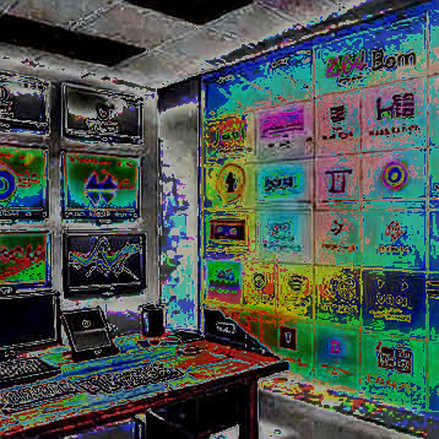
At a recent Shanghai AI fair, Alibaba's booth hummed with polished demos of Qwen-powered tools—code assistants that wrote in flawless Python, customer service bots that handled multiple languages, and document analyzers that could summarize a hundred-page report in seconds. Yet the real energy wasn't at the official stations. It was in the corners, where developers whispered about how to run Qwen2.5-72B locally, for free, on their own hardware. The contrast was palpable: a show of technical prowess matched by an equally loud silence on paid conversions.
This is the narrative that Crypto Briefing captured in its short report: Alibaba's Qwen series, one of the world's most capable open-source large language models, is struggling to monetize its success. As a fund manager who has spent a decade watching technological hype cycles consume themselves, I recognize the pattern immediately. It's the ICO playbook of 2017, played out in AI—a brilliant protocol giving away the core product for free, then wondering why no one wants to pay for the bottled version.
Context: The Open-Source Double-Edged Sword
For those outside the AI community, Qwen (通义千问) is Alibaba's answer to Meta's Llama and OpenAI's GPT. It consistently ranks near the top of Chinese-language benchmarks, beating Llama-3-70B on MMLU-pro and matching GPT-4-Turbo on several reasoning tests. Alibaba has released multiple versions: tiny 7B models for edge devices, a 72B beast for cloud workloads, a MoE variant (Qwen2.5-MoE) that slashes inference costs, and multimodal versions that handle vision and language. All released under Apache 2.0 licenses, all available for anyone to download and run.
This strategy has won Alibaba immense goodwill. On GitHub, Qwen repositories have accumulated over 30,000 stars. The Hugging Face community has produced hundreds of fine-tuned variants. It is a darling of the open-source world. But here's the paradox: every download of the free model is a lost API call. Every developer who runs Qwen locally on a rented A100 is one less customer for Alibaba's cloud platform, BaiLian.
The Shanghai fair was meant to change that. The booths showcased Qwen as a platform for enterprises: custom fine-tuning, SLA guarantees, data privacy, and integration with Alibaba's ecosystem—DingTalk, Taobao, and Aliyun. The message was clear: you get the open-source model, but we offer the enterprise-grade convenience. Yet the conversion rate, based on anecdotal evidence from attendees, remains low. The reason is structural.
Core: The Monetization Trilemma
I've analyzed over a dozen open-source projects in the blockchain space, and the same three forces always collide when a protocol tries to monetize: free alternatives, price wars, and lack of differentiation in the paid tier.
First, the free alternative. Qwen2.5-72B, when self-hosted, costs about ¥1 per million tokens in compute (renting an A100 at ~¥10/hour). Alibaba's API charges ¥3 per million input tokens. The math is simple: any company with moderate AI usage will break even within weeks by self-hosting. For high-volume users, it's a no-brainer to deploy on their own Kubernetes cluster. Why pay a 3x premium just for convenience?
Second, price wars. The Chinese AI market has been brutal since DeepSeek launched its V2 model at ¥0.14 per million tokens in mid-2024—a fraction of Qwen's price. Competitors like Zhipu (GLM) and ByteDance's Doubao have followed suit. Alibaba's response has been to lower Qwen prices, but this creates a race to the bottom. At current rates, the gross margin on API calls is razor-thin, if not negative, once compute, R&D amortization, and enterprise support costs are accounted for. This is not a sustainable business; it's a marketing expense disguised as a product.
Third, the differentiation gap. Alibaba markets its enterprise tier with features like private deployment, dedicated security, and priority support. But OpenAI offers the same, plus a vastly superior ecosystem of tools, certifications, and global trust. For multinational corporations, GPT-4o is the default. For Chinese state-owned enterprises that require domestic compliance, Alibaba should have an edge—but in practice, many choose Zhipu or other local players due to deeper government relationships. Alibaba's brand as an e-commerce giant doesn't automatically translate into trust for AI governance.
Surviving the noise to find the signal's heartbeat requires looking beyond the obvious metrics. The real signal is not API revenue, but the underlying cost structure. Alibaba's inference costs are higher than they could be due to GPU supply constraints. The company can no longer import NVIDIA H100s directly due to US export controls, and its domestic chips—though improving—lag in performance per watt. This means Qwen's price floor is higher than competitors who have optimized for domestic hardware or have access to cheaper GPU pools. Alibaba is fighting with one hand tied behind its back.
Contrarian: The True Monetization May Be Invisible
The conventional narrative says Qwen is failing to monetize. But I suspect the real story is more nuanced. Alibaba doesn't need Qwen to be a standalone profit center. It needs Qwen to drive cloud adoption. Every developer who downloads the open-source model is one step closer to deploying on Alibaba Cloud, using its GPU instances, object storage, and data services. The API is a loss leader, not a product.

Moreover, the most valuable integration may be inside Alibaba's own products. DingTalk, China's dominant workplace messaging app with over 600 million users, already embeds Qwen for document drafting, meeting summaries, and workflow automation. Taobao's customer service bots are powered by Qwen. Aliyun's own DevOps tools use it for log analysis and code review. If Qwen can transform these internal products into premium SaaS features—charging enterprises per user per month rather than per token—the revenue could dwarf any API business.
This is where tokenomics meets the human condition. In the blockchain world, we saw similar dynamics with Ethereum: the base layer was open and cheap, but the value accrued to applications built on top. Alibaba is playing the long game, building a platform where Qwen is the infrastructure, not the product. The API pricing struggles are real, but they are symptoms of a deliberate strategy to commoditize the base layer and monetize the ecosystem. The Shanghai fair's attempt to monetize directly may be a red herring—a necessary trial balloon to gauge demand, not the final business model.
Navigating the fog where logic meets faith, I see two camps. The pessimists focus on the API pricing and conclude that Alibaba has a monetization problem. The optimists see an ecosystem play that is still in its early innings. The truth likely lies in between: Alibaba will never dominate the API market, but it doesn't need to. What matters is whether Qwen can drive enough cloud loyalty to offset the cost of giving away the model for free.
Takeaway: The Narrative Shift to Watch
The short-term signals are noisy—price cuts, fair demos, and mixed customer feedback. But the signal I'm tracking is Alibaba's capital allocation. If the company continues to invest billions into Qwen's development while maintaining low API prices, it signals a bet on ecosystem lock-in. If it raises prices or cuts investment, it signals a retreat to profitability.
For now, the Qwen narrative is one of unrealized potential. It is the most advanced free lunch in AI, a technical masterpiece struggling to find its business soul. But in my experience, the best protocols are those that, like Ethereum or Bitcoin, take years to find their true monetization model. Alibaba has the patience and the balance sheet to ride out the current storm. The question is whether the market has the same patience—or whether the narrative of 'struggling' will become a self-fulfilling prophecy.

Unearthing value from the ruins of previous cycles teaches us one thing: the projects that win are those that align technical excellence with a monetization story that feels inevitable, not forced. Qwen's story is not yet written. But as I walked away from the Shanghai fair, I couldn't shake the feeling that the silence from developers running Qwen locally was not a threat—it was Alibaba's quiet advantage, waiting to be flipped into a revenue stream that doesn't look like an API call at all.