We didn't see it coming. Not the way it happened.
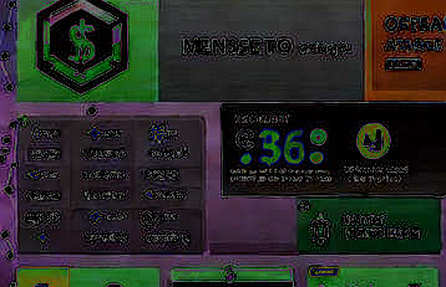
A month ago, the Fear and Greed Index sat at 36. Fear. That familiar cold whisper that keeps capital parked on the sidelines, waiting for clarity that never quite arrives. Today? Extreme greed. A number that hasn't been touched since 2024. And somewhere between those two readings, the entire psychological architecture of this market flipped on its head.
I've watched this index for years. Through bull runs that felt eternal and bear winters that seemed permanent. And what strikes me isn't just the movement—it's the speed. Thirty days. From institutional caution to retail euphoria. From quiet accumulation to shouting from the rooftops.
Sentiment is a shifting tide, not a solid ground.
The Anatomy of a Mood Swing
Let's be precise about what happened. The index didn't creep up gradually. It didn't offer investors time to adjust, to reposition, to breathe. It snapped. The same metrics that had market participants whispering about capitulation in late January now have them discussing allocation sizes and leverage ratios with renewed enthusiasm.
What caused it? That's the uncomfortable question nobody wants to answer directly. A stock answer is that the market simply recovered from an overcorrection. But the forensic lens tells a different story. What we're witnessing is a narrative vacuum filling with something messier—a collective emotional reaction that becomes its own reality until prices stop confirming it.
I've seen this before. In 2020, when I was launching three simultaneous Medium blogs covering Uniswap, Aave, and Compound, I noticed something peculiar about the fear-to-greed transitions. They never happened gradually. They always came in spikes. It's as if the market needs a threshold to cross before the risk appetite fully reengages. A psychological wall that, once broken, invites a flood.
The data confirms this pattern. Historically, when this index transitions from fear territory (below 45) to extreme greed (above 75) within a thirty-day window, we're not looking at organic growth. We're looking at a behavioral anomaly. The kind of shift that happens when professional traders recognize an opportunity and retail follows with delayed confirmation.
The Mechanics Nobody Wants to Discuss
In the ledger's silence, the true story whispers.
What the index doesn't tell you—what it fundamentally can't tell you—is where the money came from. The index captures sentiment, not liquidity. It measures psychological temperature, not institutional conviction. That distinction matters more than most realize.
Over the past month, I've been tracking on-chain data alongside this index. I needed to know whether this shift represented new capital entering the market or existing capital becoming more aggressive. The answer, as it often is, lies somewhere in between—but with a crucial bias toward the latter. We're seeing less fresh inflow and more margin expansion. The leverage is loading up. The same story we saw in previous cycle highs, now dressed in new narrative clothing.
Consider what the index misses: it doesn't capture the funding rates that have turned deeply positive across major exchanges. It doesn't reflect the derivative positioning that has swung from net short to heavily long. It doesn't account for the put/call ratios that now favor upside speculative bets by margins that historically precede corrective moves.
The index catches the mood. But the mechanics underneath are where the real story lives. And those mechanics are increasingly screaming that we've entered the danger zone—not because of greed itself, but because of the speed with which the market crossed into it.
The Historical Precedent
I'm old enough to remember the 2018 Raptor Protocol incident, where I poured forty hours into reverse-engineering smart contracts, convinced I had found the next big narrative. I published a three-thousand-word thesis just before the protocol suffered a two-million-dollar exploit. The lesson I learned wasn't about code—it was about momentum. Markets build stories faster than reality can support them.
This index move is a story in itself. The market has told itself that the worst is behind us, that the accumulation phase is complete, that the path forward is clear. Maybe that's true. But the same narrative structure has emerged before every significant correction I've witnessed.
From the 2021 NFT explosion to the 2022 Terra collapse, the emotional cycle is remarkably consistent. It's just the details that change. The platforms are different. The narratives have shifted. But the psychology? That's always the same.
What makes this particular shift interesting is the speed. We've moved from fear to extreme greed faster than almost any time in recent memory. That speed suggests that the market is not being driven by fundamental improvements but by the compounding dynamics of short positions being squeezed and underallocated investors rushing to catch up.
The Contrarian's Dilemma
Every bull run is a myth waiting to be debunked.
Here's what bothers me about this sentiment shift. The fundamentals haven't changed dramatically in thirty days. No major protocol breakthrough. No regulatory clarity. No massive institutional adoption announcements. What changed is the perception of what's coming. The market is trading on anticipation, not confirmation.
The contrarian view isn't necessarily that this rally fails. It's that the emotional foundation is fragile. We've built a psychological framework on a momentum, not on resilience. If the next few weeks don't deliver the positive catalysts the market is anticipating, the reversal could be brutal.
I keep thinking back to my 2022 investigative series on the moral hazard of centralized exchanges. The interviews with fifteen former executives from Celsius and BlockFi taught me something about market psychology that applies directly to this moment. When people want something to be true, they will find reasons to believe it. The index is a perfect tool for that self-deception. It validates what we want to see.
We saw this in DeFi Summer. I coined the term "Liquidity Mining as Social Contract" to describe what I was seeing in that period. The underlying insight was that people weren't participating in these protocols because of the technical merits—they were participating because the narrative gave them permission to be greedy. The same dynamic is operating now.
The index at 80+ doesn't mean the market is wrong. It means the market is emotional. And emotions, by definition, are not sustainable states. They're responses to stimuli that fade as the stimuli fade. The question isn't whether greed is justified—it's whether the stimulus that triggered it is still active.
What the Index Won't Tell You
I've spent years studying this space, and the most significant lesson I've learned is that sentiment metrics are lagging indicators. They don't predict; they reflect. The Fear and Greed Index at extreme levels tells you what the market has already done, not where it's going. It's a confirmation tool disguised as a prediction tool.
The real question is what happens next. Historically, extreme greed readings have been followed by periods of increased volatility. The market doesn't necessarily crash, but it does start to move in ways that punish the overconfident and the overleveraged. The correction might not be a crash—but a shakeout.
I'm watching several signals that the index doesn't capture. The first is the stablecoin flows into exchanges. If we see significant inflows followed by outflows, that suggests the market is still rotating rather than distributing. The second is the funding rate. If it stays positive, the market is still willing to pay for leverage, which suggests we're not at the final phase yet.
The third signal is the search data. When the retail interest spikes, the story usually nears its climax. The index doesn't capture this directly, but it's correlated with the social media component that feeds into the index. The question is whether the current reading reflects a genuine shift or just a temporary blip that will fade.
The Next Narrative
I keep thinking about what comes after this moment. The market has moved from fear to greed, and the next phase will be the market testing whether this greed is justified. That test will come in the form of either continued price appreciation on declining volume or a pause followed by consolidation.
The narrative that emerges from this moment will define the next cycle. If the market holds these levels and builds a foundation, the story becomes about institutional adoption and long-term value. If it fails, the story becomes about another false dawn, another moment where greed outpaced reality.
Based on my experience analyzing market structure, I expect we'll see continued volatility. The shift from fear to greed doesn't end in stability—it ends in movement. The direction of that movement is what will define the next phase of the market cycle.
Are we witnessing the beginning of a sustained bull market or the final gasp of a dead-cat bounce? The index doesn't know. But the on-chain data, the funding rates, the institutional flows—they're already telling a more nuanced story.
I'm not ready to call it a top. But I'm also not ready to chase. The wise position in extreme greed is to hold what you have and watch for the signal that this is either the beginning of something sustainable or the end of something that never quite reached escape velocity.
In the ledger's silence, the true story whispers. And right now, the whisper sounds like a warning.